
I have been thinking recently about the extraordinary people I meet through Eat Nourish Love. People who have built businesses from their kitchen tables, changed careers later in life, overcome personal challenges or simply decided it was time to do something different.
What strikes me is that very few started with a perfectly formed plan. They had an idea, a passion and the courage to give it a chance.
As we get older, we accumulate experience, knowledge and hopefully a little wisdom, but we can also become rather good at finding reasons not to do something! Perhaps the timing isn’t right, we need more money or we’re worried about what other people might think.
Yet I increasingly believe that some of life’s most exciting opportunities arrive when we stop waiting for everything to be perfect.
When I founded Eat Nourish Love in 2021, I knew I wanted to bring people together, share knowledge and create opportunities. Having spent more than 30 years organising events and fundraising, I understood the power of connecting people, but I certainly didn’t know exactly where it would lead.
Five years later, we have our events, podcast, ENL Collective and a growing community of wonderful brands and entrepreneurs. There have been challenges along the way, but I have learnt that you don’t need to have everything figured out before you begin.
Experience is an asset, not an obstacle
There is some fascinating research that challenges the idea that successful entrepreneurs are always young. A study published in American Economic Review: Insights found that the average age of founders of the fastest-growing new businesses in the United States was 45.
I find that enormously encouraging. We hear so much about young entrepreneurs, but what about those who have spent decades developing skills, building relationships and learning from experience?
Perhaps we should stop thinking about reinvention as starting again and instead recognise it as building on everything we already know.
This is something I see throughout our ENL Collective. People at different stages of their journeys, sharing knowledge, supporting one another and creating opportunities that might never have existed otherwise.
Sometimes one conversation changes everything
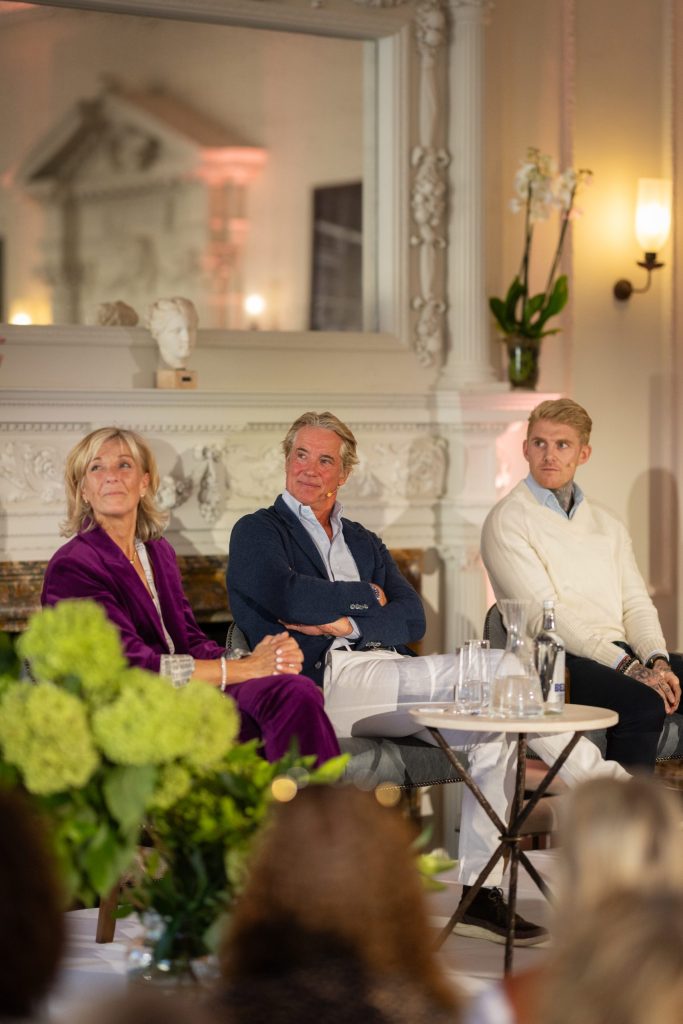
Our recent ELEVATE event at Benham Park reminded me exactly why I love bringing people together. We had eight exceptional speakers, 35 wonderful brands and a room full of people sharing ideas, making introductions and discovering new possibilities.
The conversations happening away from the stage were every bit as exciting as those taking place on it.
Sociologist Mark Granovetter’s influential research, The Strength of Weak Ties, explored how people outside our immediate circle can introduce us to new information and opportunities.
I have seen this countless times throughout my career. An introduction leads to a conversation, a conversation becomes a collaboration, and suddenly something extraordinary begins.
It is why I want the ENL Collective to be so much more than a directory. I want it to be a community where people genuinely support one another, share ideas and help each other grow.
Perhaps the answers are already within us
One of the wonderful businesses within our Collective is the Academy of Alchemy, founded by Andrew Wallas. Bringing together psychology, personal development and leadership, the Academy explores how understanding our beliefs and behaviours can help us approach life and business with greater clarity and purpose.
Having trained in complementary therapies myself, I have always been fascinated by the connection between our emotional wellbeing and the choices we make.
Sometimes the biggest obstacle to doing something new isn’t our age or circumstances, but the limitations we place upon ourselves.
I also love seeing businesses such as NatureDoc, founded by Lucinda Miller, sharing specialist nutritional knowledge, and Rebuildagram helping entrepreneurs develop the confidence and skills to grow their businesses. Different approaches, but all centred around helping people move forward.
What are we really working towards?
Of course, building a business or pursuing a new ambition takes hard work, determination and sometimes considerable sacrifice. Financial success matters, but so does creating a life we actually enjoy.
Are we spending time with the people we love? Looking after our health? Continuing to learn? Making space for the things that bring us happiness?
The Harvard Study of Adult Development has highlighted the importance of strong relationships to our happiness and long-term wellbeing.
Perhaps that is why I still love bringing people together in person. There is something about sitting around a table, sharing a meal or having a proper conversation that simply cannot be replicated through a screen.
As we approach the end of another year, perhaps it is worth thinking about something we have been putting off. A business idea, a conversation, a course or simply making more time for ourselves.
It doesn’t have to involve changing everything. Sometimes it is simply having the courage to send an email, arrange a meeting or say yes to an opportunity.
There are still extraordinary people to meet, new things to learn and wonderful chapters waiting to be written. I think that is rather exciting.
With love,
Caroline x
A BOOK I WOULD LOVE TO SHARE
The 100-Year Life: Living and Working in an Age of Longevity
Lynda Gratton and Andrew J. Scott
This fascinating book challenges the traditional idea that life should follow a predictable pattern of education, work and retirement. As we live longer, the authors explore how we may have opportunities for several careers, new skills and entirely different chapters in our lives. What resonates most with me is their emphasis on investing not only in our financial future, but also in our relationships, health, and sense of purpose.
A wonderful reminder that getting older doesn’t mean slowing down. It can mean discovering entirely new possibilities.
Research referenced: Azoulay et al., Age and High-Growth Entrepreneurship (2020); Mark Granovetter, The Strength of Weak Ties (1973); Harvard Study of Adult Development.