In a world that constantly celebrates what is new, what is fast, and what is coming next, I often find myself far more interested in what continues to stand strong what has endured over time, adapted quietly, and continues to evolve in business.
The businesses that endure.
Not the ones that shout the loudest or move the fastest, but the ones that keep going steadily, consistently, with a clarity of purpose that deepens over time. There is something incredibly compelling about that kind of longevity, particularly now, when so much of what we see is built for immediacy rather than something that truly lasts.
Working closely with founders through the ENL Collective, I see businesses at every stage. Some are just beginning, full of energy and possibility. Others are navigating the more complex middle ground building structure, refining their offer, and learning what works.. and then, every so often, there are those that have quietly moved beyond two decades. Those moments feel different. They carry weight.
This week, we are recognising a brand within the Collective that has reached 22 years in business. And when you really pause on that number, it begins to mean something quite significant…. and the reality is…. most businesses do not get there.
In the UK, around 20% of businesses fail within their first year. By year three, close to 50% have closed. By the ten-year mark, only around 30–35% are still operating, and beyond fifteen years, the number drops further still. To move past twenty years places a business in a relatively small and resilient group particularly at a time when the average lifespan of companies is now estimated to sit somewhere between 15 and 20 years, and in some sectors, even less.
While cash flow is often cited as the primary reason for failure accounting for over 80% of business collapses it is rarely the only factor. Around 40% of businesses fail because there simply isn’t a strong enough market need for what they offer. Others struggle as they grow, when complexity increases, costs rise, and the founder is required to step into a very different role one that demands leadership, structure, and long-term thinking rather than instinct alone.
This is the part that is often less visible.
A business is not something you build once and then maintain. It is something that evolves continuously, and it requires the person behind it to evolve as well. The mindset that gets a business to year one is very different from the mindset required to sustain it to year ten, and entirely different again from what is needed to reach twenty and beyond.
When you look more closely at sectors such as retail and particularly something like jewellery the challenge becomes even more pronounced. These are industries shaped by emotion, by taste, and by constant change. Consumer expectations are high, competition is global, and digital has accelerated everything. It is often said that many small retail brands struggle to maintain momentum beyond five to ten years without either losing clarity or becoming overly reactive to trends.
Which is why longevity, in this context, becomes so interesting.
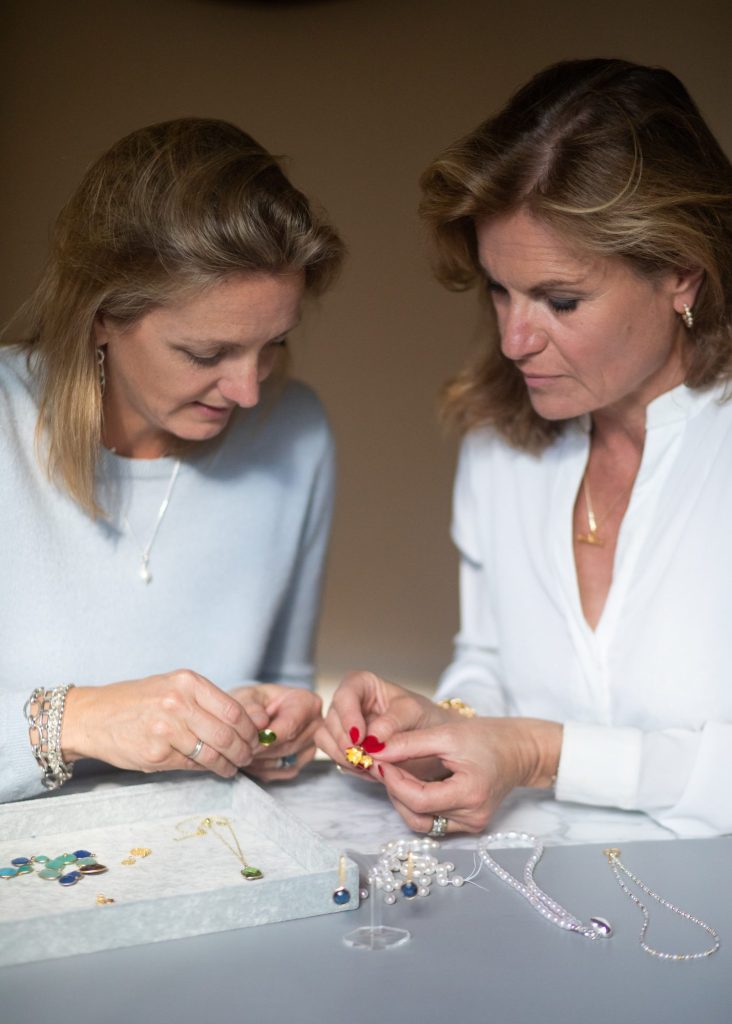
One of the brands within our Collective, Flutterby Jewellery, has reached that 22-year mark. Built steadily over time, it reflects something that cannot be rushed a deep understanding of its customer, a careful approach to curation, and a consistency that has been maintained, not through standing still, but through evolving in the right ways.
And when you look at businesses that last, there are certain patterns that begin to emerge.
They are not trying to be everywhere or do everything. Instead, there is a clarity in what they offer and who they serve. They focus on building relationships rather than simply driving transactions, and they refine their proposition over time rather than continually reinventing it in response to every external shift.
It is also worth stepping back and recognising just how important these businesses are more broadly. In the UK, there are over 5.5 million small businesses, representing around 99% of all enterprises and contributing approximately 60% of private sector employment. They are not a small part of the economy they are, in many ways, the foundation of it.
And yet, despite that, long-term survival remains rare.
What I find particularly valuable, being surrounded by so many businesses at once, is the perspective it gives. You begin to see that success is not a single definition. It is not always about scale, speed, or visibility. In fact, many of the most enduring businesses are not the fastest growing they are the most consistent.
There is a discipline to that.
Because what becomes increasingly clear is that businesses rarely fail because they cannot start. They fail because they cannot evolve. Each stage requires something different. Early on, it is about momentum and courage. In the middle years, it becomes about clarity, systems, and financial discipline. And beyond that, it requires a more strategic mindset an ability to prioritise, to say no, and to build something that is sustainable over time.
To reach 22 years in business is, in many ways, to move into something closer to legacy.
It represents not just survival, but thousands of decisions small, consistent choices made over time. It reflects adaptability, resilience, and a belief in what is being built, even when circumstances change.
And perhaps most importantly, it reminds us of something very simple, but very powerful.
Longevity does not come from doing everything. It comes from doing the right things, consistently, over time, with care. And there is something incredibly powerful in that.
How lucky to be working with brands like these, where you watch founders get stronger – adapt to what is working – what is not working and learning to pivot more and more in this ever-changing world – a huge happy birthday to you!