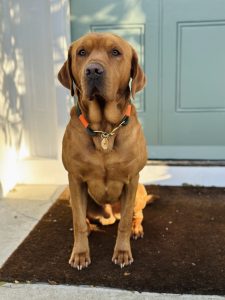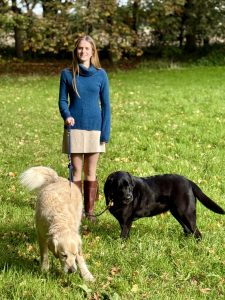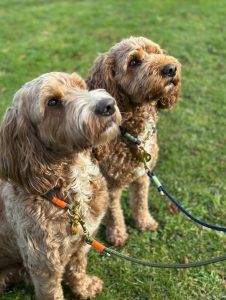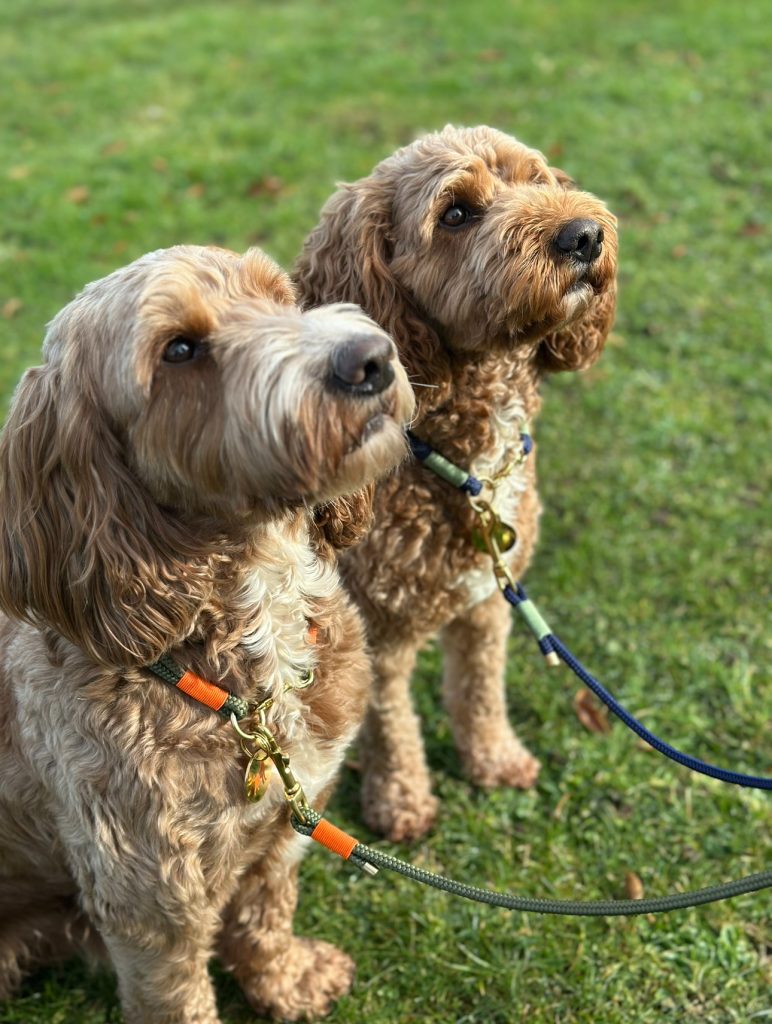
Anyone who knows me knows how much I love my dogs, and one of my absolute non-negotiables every day is taking them for a walk. However busy life becomes, getting outside with them gives me time to think, breathe, notice what is around me and step away from everything else for a while. I often wonder whether I am taking them for their walk or whether, in fact, they are taking me for mine.
There is something quite extraordinary about the relationship we have with dogs. They cannot talk to us in words, yet when you live closely with an animal you realise how much they are communicating all the time. You notice their eyes, their ears, the way they hold themselves, a slight change in behaviour or the way they suddenly come and sit beside you. We learn to read them, often without even realising we are doing it, and they become remarkably good at reading us too.
We hear about horse whisperers, but perhaps there are dog whisperers everywhere. What we call intuition is often years of observation and thousands of tiny interactions between an animal and the person who knows them best.
Interestingly, science is beginning to explain some of this. One fascinating Japanese study found that when dogs and their owners gazed at one another, levels of oxytocin, a hormone associated with bonding and attachment, increased in both. Researchers described a positive feedback loop rather like the one involved in bonding between a mother and baby. It is extraordinary to think that something as simple as your dog looking into your eyes can be part of a genuine biological response.
Dogs also appear to be remarkably sensitive to human emotion. Research has shown that they can combine information from our facial expressions and voices to distinguish different emotional states, which perhaps explains why so many of us feel that our dogs know when something is wrong before we have said or done very much at all.
The physical benefits are equally interesting. A large UK study found that dog owners spent around 220 minutes each week walking their dogs, and 64% met recommended physical activity guidelines through dog walking alone.
There is another part of dog walking that I think is easily overlooked. We are outside in natural light, noticing the seasons and spending time away from screens. We also talk to people. Anyone who regularly walks a dog will recognise how easily conversations begin between complete strangers, usually because the dogs have introduced themselves first.
The research around animals and mental health is more nuanced than some headlines would have us believe, but there is evidence that interacting with dogs can influence our stress response, including cortisol, while pets can provide companionship, routine and opportunities for social connection. For me, perhaps the most important point is that dogs require us to be present. They do not care how many emails are waiting or what is happening tomorrow; they are interested in what is happening now.
Learning to listen to them
I have spent years reading and learning about my own dogs, particularly their behaviour and what I feed them, and the more I learn, the more fascinating I find them.
A wagging tail, for example, does not automatically mean a dog is happy. We need to look at the whole animal: its posture, eyes, ears, movement and the situation it is in. Allowing dogs time to sniff on a walk matters too. Their sense of smell is extraordinary, and sniffing is one of the principal ways in which they gather information about their environment.
Food is another area I have researched extensively. I personally love raw feeding and have seen how well it works for my own dogs, although I am very aware that there are different views around it. Whatever we choose to feed, I think the important thing is to research it properly, ensure our dogs receive a complete and balanced diet and make choices based on the individual animal rather than simply following the latest trend.
The same principle applies to so many of the things we buy for our dogs. I increasingly want to know who has made something, what it is made from, whether it is comfortable and whether somebody has genuinely thought about the animal who will be using it.
When good design starts with the dog
This is what interested me when Camilla Roberts and The Boot Room Company joined the ENL Collective.
Camilla is half French and loves the juxtaposition of British and Continental style. During trips to Italy, she had noticed wonderfully gregarious dog accessories in bright pinks and purples, with flashes of neon and a wonderful sense of fun. Her husband enjoyed ocean sailing, and between them they began thinking about whether the materials used in sailing could be transformed into something beautiful and practical for dogs.
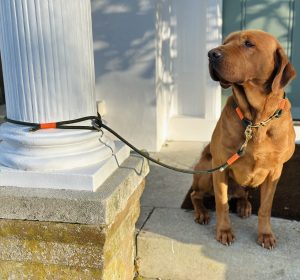
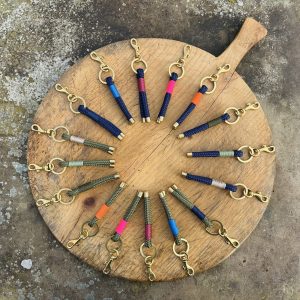
The result is a collection of dog and lifestyle accessories handmade using marine rope, contrasting coloured whipping cord and solid brass hardware.
What I particularly like is that the design did not begin purely with how the products look. Sailing rope is incredibly practical and durable, while also being soft on the dog and comfortable to hold. The colour combinations give the pieces their personality, but there is a real purpose behind the materials.
Because the products are handmade, Camilla can also make them to suit an individual dog and owner. Someone might need a particular length or width, a clip positioned differently, a hands-free lead for running or a double lead with a swivel for two dogs. There are customers who have been searching for a particular type of lead for months and suddenly discover that Camilla can simply make it for them.
I love that element of small independent businesses. There is a person at the other end who listens and can adapt something because she understands why the detail matters.
The Boot Room Company’s customers are wonderfully varied too, from grooms in muddy wellies who love a flash of neon and country dog owners who want to be able to spot a lead in long grass, to busy mothers looking for a hands-free lead and people who simply want something beautifully made that will last. The same sailing materials also appear in their keyrings and telephone cords, taking that combination of practicality, colour and craftsmanship beyond the dog walk.
Perhaps they understand more than we realise
The more time I spend with my dogs, the more I think that caring properly for an animal begins with paying attention. It is noticing what they are trying to tell us, understanding what makes them comfortable, thinking about what we feed them, giving them time to explore and choosing the everyday things we use with a little more care.
Our dogs give us an extraordinary amount without asking for very much in return. They get us outside, make us move, introduce us to strangers, make us laugh and provide the most wonderful companionship. Somewhere amongst all of that, they also teach us to slow down and become better observers.
Perhaps that is the real secret of the so-called dog whisperer. It isn’t really about whispering at all. It is about learning to listen.
The Boot Room Company is part of the ENL Collective and creates handmade dog and lifestyle accessories in Britain, including bespoke pieces made for individual dogs and their owners.