
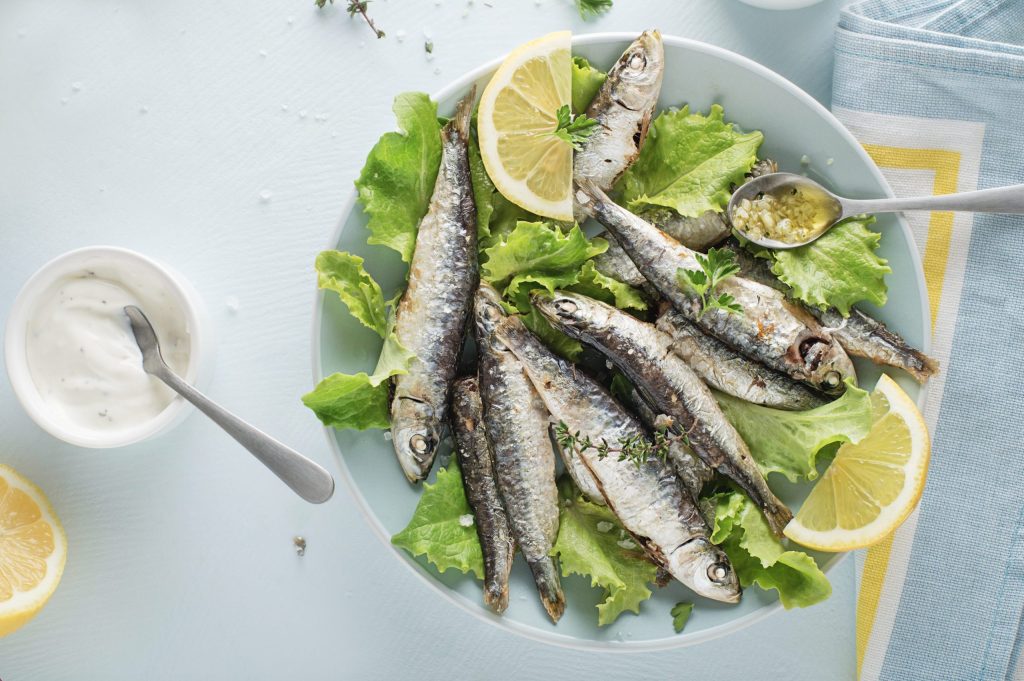
At the start of the year, many of us naturally pause and take stock. We think about how we want to feel and what might help us feel stronger, lighter or more energised as the months unfold. For me, that usually means stripping things back rather than adding more rules, and paying attention to food that genuinely nourishes and fits into real life. Which is how sardines found their way back onto my plate, not as a trend or a fix, but as a simple, sensible choice that quietly does a lot of good.
Sardines are not new, and they are certainly not fashionable in the way some foods suddenly become. Yet they have been part of traditional diets for generations, particularly in parts of the Mediterranean where longevity and good health often go hand in hand with simplicity. As more of us question ultra processed foods and look for nourishment that feels grounding rather than extreme, sardines have quietly re entered the conversation, and for very good reason.
From a nutritional point of view, sardines are remarkably dense in what the body actually needs. They provide complete, high quality protein, which supports muscle, energy and satiety, all of which become increasingly important as we get older. They are also naturally rich in omega three fatty acids, the fats linked to heart health, brain function and inflammation regulation. One nutrition expert described them to me as one of the most efficient whole foods available, high return with very little effort, which feels like a fair summary.
Unlike larger fish, sardines sit low on the food chain. Because they are small and fast growing, they accumulate far fewer toxins, including mercury. This makes them a safer option to eat regularly, without the concern that often comes with bigger predatory fish. It is an easy detail to overlook, but one that matters when thinking about long term health rather than short term fixes.
There is also something quietly powerful about the fact that sardines are usually eaten whole. The soft, edible bones provide calcium, phosphorus and vitamin D together, a combination that is surprisingly difficult to find in a single food. Add vitamin B12, iodine and selenium, and you begin to see why sardines are often described as small but mighty.
In a world where healthy eating can feel complicated, sardines are refreshingly straightforward. They are affordable, shelf stable and require almost no preparation. Open a tin, add a squeeze of lemon or a spoon of olive oil, perhaps some herbs or good bread, and you have something genuinely nourishing within minutes. There is no performance involved, no elaborate recipe, no sense of doing it right or wrong.
I am always up for trying things and seeing what genuinely makes me feel better, and I have definitely brought sardines back into my own diet. Not as a rule or a plan, but as part of eating in a way that feels supportive and realistic. For me, it is rarely about big goals or dramatic changes. It is about the small, everyday behaviours that add up over time. What we reach for, what we repeat and what feels easy enough to keep doing. And on that front, sardines feel like a very good place to start. Happy sardines.